
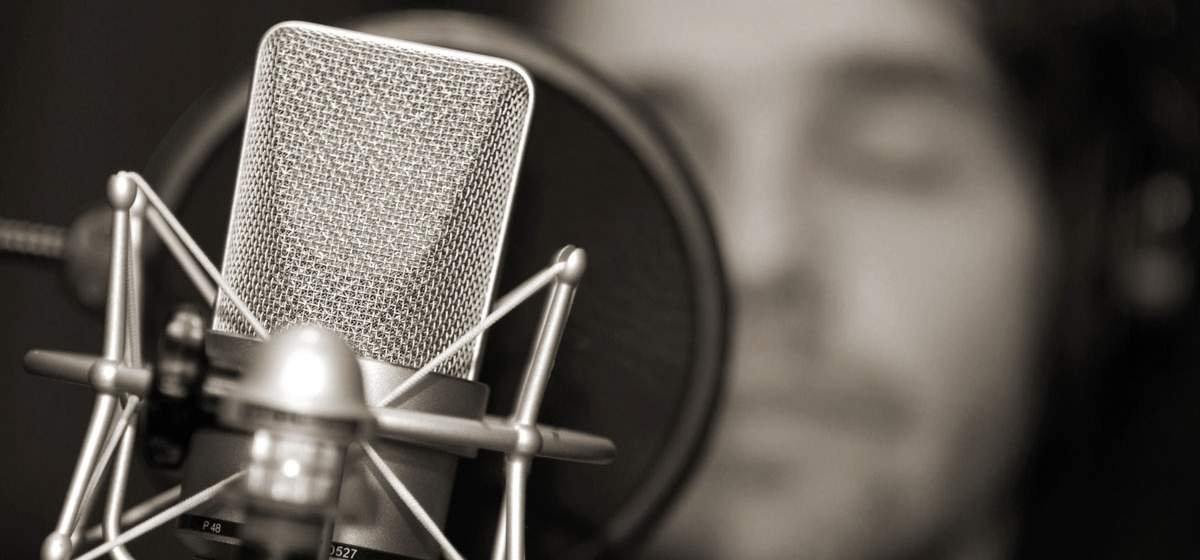
Commercial voice artist or dubbing actor?
One of the most important questions should be settled right at the start. What exactly does someone mean when they say they want to become a voice artist? Many people are familiar with the term “Synchronsprecher” (dubbing artist). But they often mean very different professions by it. The difference between a commercial voice artist and a dubbing actor may not be entirely clear to some at first, but there are big differences in the way they work and the skills required.
A dubbing actor (dubbing artist) works, as the name suggests, in film dubbing. In a dubbing studio, a lip-synchronised language version in a language other than the film's original language is created with the help of the so-called IT track. The IT mix (International Tape) contains all non-dialogue elements such as ambience, sound effects, music etc. and is, so to speak, a kind of universal basis for translating a film into another language. The original dialogue is then recorded in another language, lip-synchronised (as far as possible). In this way, every actor gets a new voice of their own. Besides dubbing the actors, there are also so-called group or crowd recordings. These can be background voices, but also special effects such as announcements, computer voices or singing.
What's special about a dubbed version is, for one thing, the completely different presence of the voices compared with an original version, in which the dialogue in most scenes was recorded directly on set. The speech in a dubbed version often sounds much more direct and closer. For another, through this new combination the dubbing voice can give the actor a partly different character. That's why film lovers are deeply divided over whether to watch dubbed versions or the film in its original language with subtitles.
Germany is one of the world's “dubbing countries”. As in France or Italy, for example, a lip-synchronised language version is produced for almost every film shown in Germany. With the growing popularity of streaming services such as Netflix or Amazon in recent years, and their strategy of producing their own films and series, the entire dubbing industry is experiencing a real boom. Many dubbing studios now have to work double shifts to complete all their orders on time. In Germany, Berlin is the undisputed dubbing capital. There are now more than 200 dubbing studios here alone. But the dubbing industry is also strongly represented in cities such as Munich, Hamburg and Cologne.
In dubbing recordings, the dubbing actor in the studio is joined by a dubbing sound engineer, a director and a dubbing editor.
The dubbing sound engineer is responsible for keeping an eye on all sound parameters according to the picture and implementing them. For example, depending on the scene, the acoustic perspective and the sense of space have to match the picture.
Before a dubbing session, the dubbing editor has already “taked” the script, i.e. divided it into smaller sections that form units of meaning but can also be delivered well by the actor. A so-called take can be a single word or a whole paragraph. In the dubbing studio itself, the dubbing editor supports the dubbing actor, giving instructions on length and speed, pauses, hesitations, in- and out-breaths, arm and body movements.
Finally, the dubbing director assesses the overall performance and is responsible for the dramaturgy of the new language version.
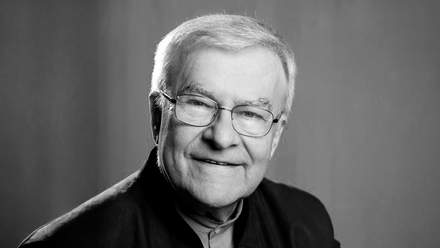
This way of working in the dubbing studio perhaps also makes it clear why in the industry it's usual to speak of a dubbing actor rather than a dubbing speaker. In this work, acting talent is of course very much to the fore (just as in front of the camera). Often they are well-known actors who have become even better known by becoming the distinctive German voice of a Hollywood star, for example. And many people are often more familiar with a dubbing actor's voice than with their work in front of the camera. There's probably nobody who doesn't know the voices of Manfred Lehmann (Bruce Willis), Joachim Kerzel (Anthony Hopkins), Daniela Hoffmann (Julia Roberts), Franziska Pigulla (Gillian Anderson in “The X-Files”) or Claudia Urbschat-Mingues (Angelina Jolie) (at the end of the article there are some audio samples of well-known dubbing artists at our agency).
The work of a commercial voice artist is fundamentally different from that of a dubbing actor in a dubbing studio. We should say up front that we use the term “commercial voice artist” mainly to distinguish it from “dubbing actor”. A commercial voice artist's work covers not only classic TV or radio advertising, but also voice recordings for corporate and industrial films, audio guides, telephone announcements or TV reports, for example.
Work in the recording studio is also fundamentally different from the dubbing studio. A commercial voice artist often works with just one sound engineer, so they have to decide much more independently how to deliver the text. The clients are often present or connected by phone, but a commercial voice artist has to “offer” more here and recognise what direction the client is thinking in and how they want the voice artist to deliver it. A commercial voice artist also often has little time to prepare for the recording, as many texts are only finalised at the last minute. So one of the most remarkable skills of a good voice artist is being able to read a text they don't know – usually on the very first take – without mistakes, perfectly timed and well accented, acting as their own director, and then immediately offering various alternatives. This may sound very pragmatic at first, but it's a high art, for example, to deliver the text for a 20-second TV spot, which is often tightly timed, perfectly accented, spot on and yet seamlessly. In the end it sounds as if it could never have been any other way, even if two hours or more went into recording a 20-second spot.
How do you become a commercial voice artist or dubbing actor?
If you look at the biographies of various professional voice artists, you quickly realise that there isn't one “right” way. Many dubbing actors naturally have acting training as their background. But speaking in front of a microphone usually plays little or no part in such training. And especially in the work of a commercial voice artist, there are many things that are initially unfamiliar to an actor. You work purely with your voice; other performative elements don't exist and usually even get in the way. For example, it's not advisable to move too much in front of the microphone in the recording booth and cause unwanted noise. Speaking technique in front of the microphone also differs greatly from work on stage or in front of the camera. And making the recording for a commercial sound “seamless” in the end is a speaking art you have to learn from scratch.
We're often contacted by people who have occasionally been complimented on their voice and would like to know how to become a voice artist. Giving a blanket answer would be unprofessional, as the path there can vary greatly depending on individual circumstances.
“What would you advise me if I asked you how I could run a marathon, even though so far I only rarely go jogging for a few kilometres?”
One possible answer might be: “You need to buy a good pair of running shoes and start training. A few kilometres more each week. And at some point you'll be ready to reach the finish line of a marathon. What place you come in doesn't matter at first. And whether you'll ever win depends on further training and perhaps also on your personal aptitude.”
It's exactly the same if you want to become a professional voice artist. You have to be prepared to train a lot without knowing at the beginning what the end result will be. To start with, we often recommend booking individual lessons with a professional speech trainer, who can judge right at the start whether there are any obstacles (speech problems, for example). Further training then always depends on your personal goals and individual talent.
You should steer clear of any provider promising that you'll definitely be a professional voice artist at the end of a course. Claiming something like that across the board in advance would be just as dubious as promising a would-be marathon runner at the start of their training that they'll win the Berlin Marathon one day. You should always bear in mind that you're facing a lot of competition in this industry and that every client expects 100% professionalism.
In any case, you should think in advance about whether you're more interested in becoming a dubbing actor or a commercial voice artist. Of course, many voice artists work in both professions, but – as already described – the requirements are very different, and especially at the start of your training you should pursue one direction first.
Here's a small selection of speech trainers and academies:
Die Freisprecher (Berlin)
Website: die-freisprecher.com
Voice coach Richard Gonlag (Berlin)
Website: richard-gonlag.de
Voice coach Susanne Hauf (Berlin)
Website: mietcoach.berlin
Akademie für professionelles Sprechen (Berlin)
Website: mikrofonsprechen.de
Die Schule des Sprechens (Vienna)
Website: sprechen.com
Bildungszone (Vienna)
Website: bildungszone.at
In dubbing there's also the special feature that many larger dubbing studios offer open castings. However, we always recommend practising a bit first rather than going to such a casting unprepared. There are certainly natural talents, but in general, practice makes perfect!
One thing we'd like to make clear at the end: we don't want to discourage you with this article, but rather encourage you. But since we're talking about an artistic profession and not an ambitious hobby, you have to be absolutely clear from the outset that it takes a great deal of commitment and perseverance. The reward is a profession that can bring you a lot of joy and variety. And one that – this must be mentioned too – offers good earning potential in a professional context. If that doesn't put you off, set yourself the goal of your first 5 kilometres and look forward to crossing your first finish line after 42.195 kilometres!
Listen to more than 1,700 professional voices or let us put together a casting for you.
Comments (0)