
As a Romance language, Italian is descended from Latin. After the collapse of the Roman Empire, Latin initially retained its importance as the language of administration and the Church. However, a spoken variant of Latin, so-called Vulgar Latin, had already developed during the time of the Roman Empire. Over time, the individual Romance languages developed from it.
From the ninth century onwards, Old Italo-Romance spread as the first phase of the development of the Italian language. This early phase is characterised above all by the spread of Italo-Romance texts from various regions.
From 1275, Old Italian followed. This second phase is marked above all by the existence of Old Tuscan texts. The first important literary works were written mainly in Tuscany. Key among them are the works of the Italian writers Dante Alighieri, Francesco Petrarca and Giovanni Boccaccio. The end of this second phase is marked by Boccaccio's death in 1375. Boccaccio is regarded as the founder of the prose narrative tradition in Europe.
The next phase of the development of Italian was a transitional period from Old Italian to Modern Italian. This phase lasts until the publication of the linguistic treatise “Prose della volgar lingua” by the Italian writer Pietro Bembo.
The period from 1525 to 1840 is attributed to Modern Italian. During this time, 14th-century Florentine became the literary language of all Italy. The historical novel “I Promessi Sposi” (The Betrothed) by Alessandro Manzoni marks the end of this phase. Manzoni wrote his work in the Tuscan of educated Florentines (New Florentine). This work was thus decisive for the formation of a unified Italian literary language and is comparable in linguistic importance to Martin Luther's translation of the Bible.
The last phase of the development of the Italian language, which is not yet considered complete, is called “Italiano del Duemila”.
Typical of Italy is so-called diglossia, the bilingualism of an entire society. Standard Italian is used only in written language and in formal situations. In spoken communication, the regional dialect is used. However, due to greater mobility and the spread of language via mass media regardless of location, various varieties of Italian have emerged in recent decades that can no longer be pinned down to the standard language, Florentine, alone. This dynamic often leads to uncertainty, as in some cases there are no uniform norms.
Some of the various dialects spoken in Italy are quite different from one another. What they have in common is that they all derive from colloquial Latin and could therefore also be called Latin dialects. A rough distinction is made between northern, central and southern Italian dialects. Due to the linguistic development described above, Tuscan or Florentine is considered synonymous with the standard language. Only Sardinian (Sardinia), Ladin (several Alpine valleys in northern Italy) and Friulian (Friuli/Udine) are now recognised as languages in their own right.
Facts about the Italian language:
- Spoken in: Italy, Switzerland, San Marino, Vatican City, Somalia, Slovenia, Croatia
- Official language in: Italy, Switzerland, San Marino, Vatican City, Sovereign Order of Malta, European Union
- Speakers: approx. 65 million (native speakers), approx. 10 million second-language speakers
- Language codes: it (ISO 639-1), ita(ISO 639-2), ita (ISO 639-3)
- Linguistic classification: Indo-European languages – Italic languages – Romance languages – Italo-Romance languages – Italian
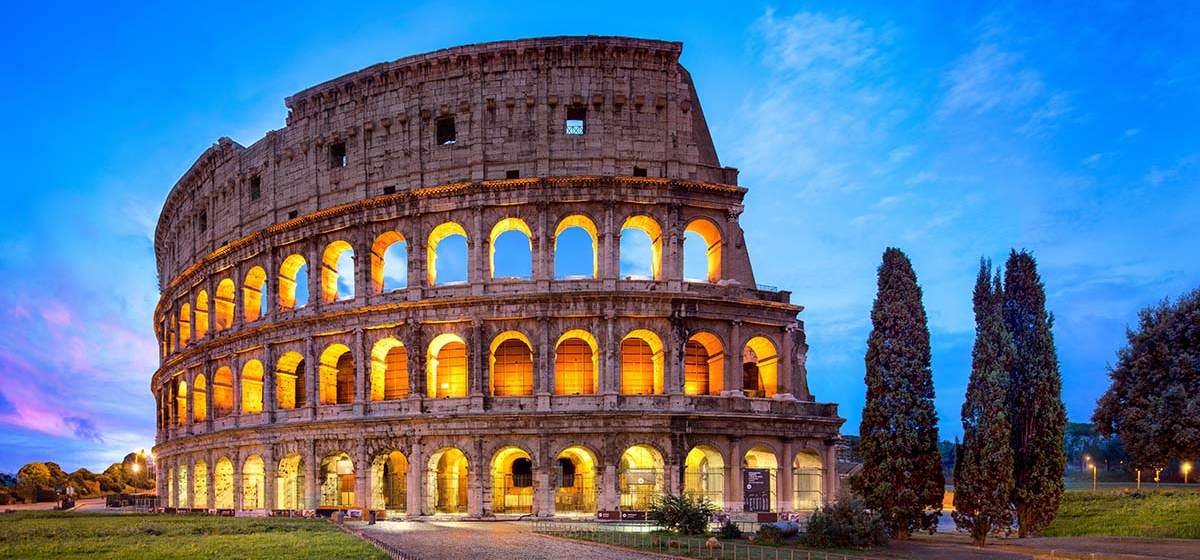
Photo: eyetronic - Adobe Stock

Listen to more than 1,700 professional voices or let us put together a casting for you.
Comments (0)