
Portuguese is a Romance language and belongs to the Indo-European language family. More narrowly, together with Spanish (Castilian), Catalan and other languages of the Iberian Peninsula, it can be grouped among the Ibero-Romance languages. Portuguese shares its origin with Galician in Galician-Portuguese.
In the 15th and 16th centuries, the age of the Portuguese discoveries, the Portuguese language spread to Africa, Asia and the Americas. In the 16th century Portuguese was the lingua franca in Africa and Asia, which greatly facilitated trade with these regions. These so-called pidgin languages (a reduced form of language with greatly simplified grammar, learned as an auxiliary language for communication) gradually expanded their grammar and vocabulary over time, so that new local languages emerged, such as Saramaccan in Suriname or Kriol in Guinea-Bissau and Senegal.
As a Romance language, Portuguese has parallels above all with Spanish, Catalan, Italian, French and Romanian. It is especially similar to Spanish in grammar and syntax. With a little practice, any Portuguese speaker can understand Spanish. The pronunciation of Portuguese, however, differs greatly. Many words in the Portuguese vocabulary come from Latin (as is generally the case with Romance languages).
In addition to Standard Portuguese (Estremenho), there are many different dialects, especially in Portugal and Brazil. In Angola, a total of 3 dialects can be distinguished. African Portuguese has a great deal in common with Brazilian Portuguese in particular. The pronunciation in São Tomé and Príncipe (Santomense) is especially closely related to the pronunciation in Brazil.
Because the spread and development of the Portuguese language are historically and geographically so diverse, it is regulated internationally by the International Portuguese Language Institute and the Community of Portuguese Language Countries (CPLP).
Facts about the Portuguese language:
- Spoken in: Portugal, Brazil, African countries such as Angola, Mozambique, Namibia or South Africa, India, Luxembourg
- Official language in: Portugal, Brazil, Angola, Equatorial Guinea, Guinea-Bissau, Cape Verde, Mozambique, São Tomé and Príncipe, Macau, East Timor, African Union, European Union, Organization of American States, Mercosur (Southern Common Market), UNASUR (Union of South American Nations), Community of Portuguese Language Countries
- Speakers: approx. 240 million
- Language codes: pt (ISO 639-1), por (ISO 639-2), por (ISO 639-3)
- Linguistic classification: Indo-European languages - Italic languages - Romance languages -Ibero-Romance languages - Galician-Portuguese
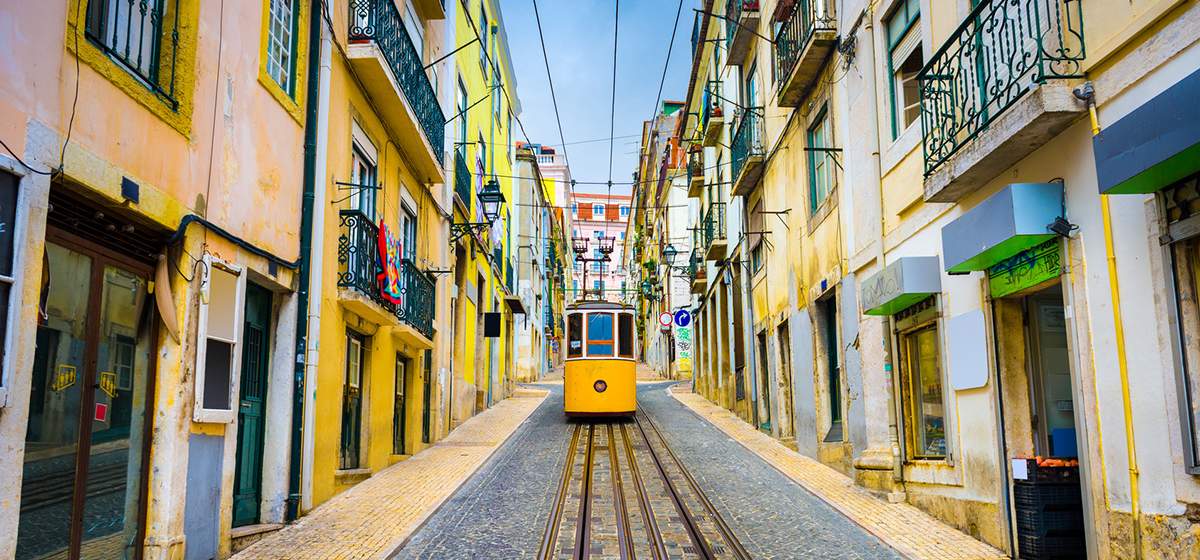
Photo: SeanPavonePhoto - fotolia.com

Listen to more than 1,700 professional voices or let us put together a casting for you.
Comments (0)