
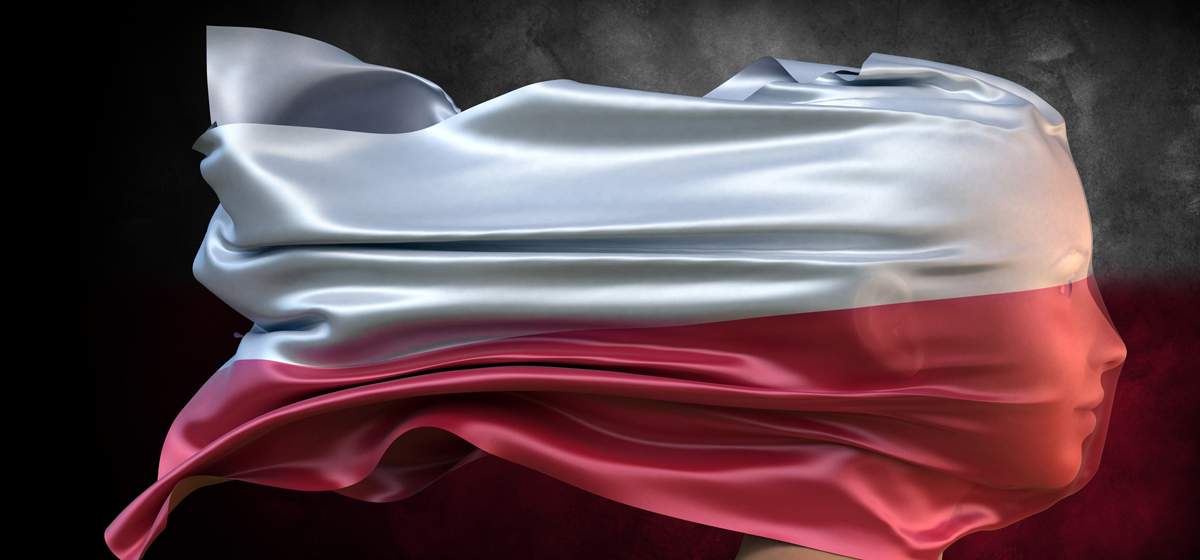
The Polish language belongs to the group of Baltic and Slavic languages within the Indo-European language family. More precisely, Polish is a West Slavic language. The Slavic branch of the Indo-European languages also includes Bosnian, Croatian, Macedonian, Russian, Serbian, Slovak, Slovenian, Czech and Ukrainian, among others. With 48 to 55 million speakers, Polish is the most widely spoken Slavic language after Russian. Russian is spoken by around 210 million people (some of them as a second language).
Among the oldest known written documents in Polish is the 13th-century religious song "Bogurodzica", which was the coronation hymn of the Polish king Władysław I and Poland's battle song at the famous battles of Tannenberg (1410) and Varna (1444). From the 16th century onwards, Polish was gradually spoken not only by the clergy but also by the nobility and the bourgeoisie, and thus became established.
From the very beginning, Polish was written in the Latin alphabet. The Polish alphabet is supplemented by additional characters representing Polish sounds and consists of 32 characters in total (A, Ą, B, C, Ć, D, E, Ę, F, G, H, I, J, K, L, Ł, M, N, Ń, O, Ó, P, R, S, Ś, T, U, W, Y, Z, Ź, Ż).
A total of 6 dialects are distinguished in Poland today: Greater Polish (dialekt wielkopolsk, spoken in central-western and northern Poland), Lesser Polish (dialekt małopolski, spoken in the south and south-east), Masovian (dialekt mazowiecki, spoken in Warsaw and the north-east), mixed dialects (dialekty mieszane, spoken in Masuria, the west and north-west), Silesian (dialekt śląski) and Kashubian (dialekt kaszubski, spoken around Gdańsk), which, however, is now counted as a language in its own right. The mixed dialects in Masuria and in western and north-western Poland arose after the Second World War, as these areas originally had a German-speaking majority, and various dialects came together as people moved in from other parts of Poland.
There are only a few Polish loanwords in German. Some examples of words German has borrowed from Polish are: Gurke (cucumber) from ogurek, Säbel (sabre) from szabla or Pulk (throng) from pólk. Conversely, there are a number of Polish words that come from German. Especially in the Middle Ages there was intensive contact between Germany and Poland (German eastward settlement). German minorities also lived in many larger towns. Examples of German loanwords in Polish are: fajerwerk from Feuerwerk (fireworks), wagon from Waggon (railway carriage), szuflada from Schublade (drawer) or kunszt from Kunst (art).
Facts about the Polish language:
- Spoken in: Poland and surrounding areas, USA
- Official language in: Poland, European Union
- Recognised minority language in: Bosnia and Herzegovina, Romania, Slovakia, Czech Republic, Ukraine
- Speakers: 48 to 55 million
- Language codes: pl (ISO 639-1), pol (ISO 639-2), pol (ISO 639-3)
- Linguistic classification: Indo-European languages - Slavic languages - West Slavic languages - Lechitic languages - Polish
Photo: arsdigital - fotolia.com
Listen to more than 1,700 professional voices or let us put together a casting for you.
Comments (0)